From Social Media to Sold Signs: Building Real Estate and Community in Raleigh
From Social Media to Sold Signs: Building Real Estate and Community in Raleigh
What does it feel like to move to a city where you know exactly one person? For Kristen Jacoby, it felt isolating. She relocated to Raleigh, North Carolina in 2023 after a recruiter reached out, and the first few months were rough. No established sphere. No local reputation. Just a real estate license and the realization that building a business from scratch in a new market is a completely different game than working where you already have roots.
But that isolation became the seed for something bigger. Kristen didn't just build a real estate business, she created Socials to Social, a Raleigh-based community that takes connection from online to offline through events, shared experiences, and the kind of in-person gathering that makes a city feel less lonely. In 2024, she sold over $10 million in real estate while simultaneously launching and scaling a separate business that now has a Red Bull sponsorship and partnerships with the Carolina Hurricanes.
This isn't a story about using community as a lead-generation funnel. It's about what happens when you build something because you needed it to exist, and then figure out how to make it sustainable without turning every relationship into a transaction. If you're relocating to Raleigh, starting a real estate career in a new market, or trying to figure out how to build genuine community in a city that doesn't hand it to you, here's what Kristen learned.
Table of Contents
- Raleigh, North Carolina: Infill Development, Stalled Inventory, and Building Community from Scratch
- Building a Real Estate Business When Nobody Knows You
- How Socials to Social Started (and Why It Wasn't About Real Estate)
- Running Two Businesses Without Losing Your Mind
- Which Path Is Right for You: Real Estate, Community Building, or Both
- Your Next Move
Raleigh, North Carolina: Infill Development, Stalled Inventory, and Building Community from Scratch
Raleigh is not a small town. It's not Blacksburg, Virginia, where Kristen started her real estate career while playing Division I field hockey at Virginia Tech. It's a city market with infill development, luxury inventory that still moves, and a mid-range price band that has hit a wall. When Kristen moved here in 2023, she found a market that operates very differently from Virginia and Texas, and a city that didn't automatically offer the kind of community she was used to.
The Raleigh market right now is split. The $300,000 to $800,000 range has stalled. Inventory sits. First-time homebuyers are staying in apartments because the economy is tough and the math doesn't work. But the luxury market, homes above that range, is still active. Buyers are still closing. Kristen sold over $10 million in 2024, working primarily with first-time homebuyers and relocation clients, which tells you something about who is still moving in this market and what kind of agent support they need.
One of the most interesting aspects of Raleigh real estate is the prevalence of infill development. You're buying a house for the land, tearing it down, and rebuilding at a 3.5 to 3.8 times multiplier. That's not the norm in every market. Kristen cold-called a developer after hearing about this on a podcast, and that conversation eventually led to the job offer that brought her to Raleigh. It's a market where land value drives decisions in ways that feel different from suburban expansion markets.
From a financing perspective, Kristen has mainly seen conventional loans. She's independent now, so she doesn't have visibility into every deal in the market, but that's what her client base has used. If you're relocating here and wondering whether VA or FHA loans are common, that's a question worth asking your lender about current conditions.
When Kristen moved to Raleigh, she found limited online content about the city. It was 2023, and ChatGPT wasn't as prevalent as it is now. She couldn't find the kind of neighborhood tours, lifestyle content, or relocating-buyer resources that would have helped her understand what living here actually felt like. So she started posting on TikTok, not about real estate, but about the places she liked, the things she wished she'd known, and the experience of moving somewhere solo. She used the name KJ (her field hockey nickname) because she didn't want her real estate colleagues finding her personal content. That decision to separate her social life from her professional brand turned out to be the foundation for what came next.
The isolation she felt when she first moved here, knowing only the person who recruited her to the team, became the reason she eventually started Socials to Social. Raleigh didn't automatically offer community. You had to build it. And if you're relocating here, especially solo, that's something to plan for. This is a city where you can thrive, but you have to be intentional about finding your people.
One non-negotiable if you move to Raleigh: go to a Carolina Hurricanes game. Kristen now partners with the Hurricanes through Socials to Social for tailgates and group game experiences, and she'll tell you it's one of the best ways to experience the city. It's the kind of thing that makes Raleigh feel less like a place you moved to and more like a place you belong.
Building a Real Estate Business When Nobody Knows You
Kristen started selling real estate during COVID while she was still in college at Virginia Tech. She got her license her junior year and started working with clients her senior year, juggling field hockey practice at 5 a.m. classes, and showings in between. She caught the tail end of the COVID market boom, the part where things were still moving fast but starting to shift. It gave her just enough momentum to believe this could work, but not enough cushion to coast.
When she moved to Raleigh in 2023, she joined a team. The recruiter who brought her there was someone she'd cold-called after hearing a podcast about infill development. That phone call turned into a 30-minute conversation that covered real estate, life, and the messy situation Kristen was navigating in Virginia. He called her back and asked what it would take for her to move to Raleigh and join his team. She said yes, even though it meant uprooting a business she'd just built.
The team experience was a mixed bag. She learned a lot. She also learned what she didn't want. Mandatory open houses. Restrictions on where she could post on social media. A culture where agents competed internally in ways that felt more cutthroat than collaborative. One agent took a $4.2 million lead from her. That was the breaking point. She went independent in February 2024.
Going independent when you don't have an established sphere in a new city is terrifying. Kristen didn't know how she was going to make it. But the universe delivered. She got a client from Florida. Two from Colorado. Deals started closing. She ended the year having sold over $10 million, working primarily with first-time homebuyers and relocation clients, people who needed an agent who understood what it felt like to move somewhere new and figure it out from scratch.
Her advice for new agents: talk to as many people as possible. Don't just ask one person how they chose their brokerage or built their business. Get multiple perspectives. Someone on a small team will tell you something different than someone who's independent. Someone who focuses on luxury will have a different playbook than someone working with first-time buyers. You need to hear all of it to figure out what fits your personality and your market.
And here's the thing she won't apologize for: she gives commission back to loyal clients. She knows the conventional wisdom is never give up your commission. But if someone refers multiple people to her, she rewards that loyalty. That's how she builds relationships, and it's worked.
How Socials to Social Started (and Why It Wasn't About Real Estate)
Socials to Social didn't start as a real estate lead-generation strategy. It started because Kristen was lonely. She'd been in Raleigh for a while, and even though her real estate business was growing, she didn't have community. She didn't have the kind of friendships and social life that make a city feel like home. She kept thinking about how much it sucked when she first moved here, and how she didn't want other people to feel that way.
In April 2024, she posted a video on TikTok. She said she wanted to organize a DJ set where people could just get together and hang out, take connection from online to offline. The video went viral. Her DMs flooded with people saying they'd been feeling the same way and asking how they could help. She didn't have a name for it yet. A few days later, sitting in a sauna, she came up with Socials to Social.
She didn't realize the event industry was a thing. She didn't know that cities like Miami, Austin, New York, and LA had entire ecosystems built around community events and taking online connection into real life. She just knew she needed it, and apparently a lot of other people did too.
Three months in, she got a DM on TikTok from someone asking if she'd be interested in jumping on a call. It was Red Bull. She thought it was fake. It wasn't. She signed a sponsorship contract, and they've been working together for a year now. She's also partnered with the Carolina Hurricanes for tailgates and group game experiences, and she works with local businesses who want to be part of the events.
Socials to Social is a separate LLC. Kristen owns it 100 percent. She started it with free events, funding it herself from her real estate income. She still hasn't paid herself from the business. Every dollar goes back into making the events better, keeping ticket prices accessible, and building something sustainable. She's not trying to turn every attendee into a real estate client. That's not the point. The point is community.
But here's the interesting part: Socials to Social and her real estate business do feed each other, just not in the transactional way you might expect. People who come to events see what she's building. They see her work ethic, her authenticity, and the way she shows up for the community. Some of them eventually need to buy or sell a home, and when they do, they think of her. But that's a byproduct, not the strategy.
Running Two Businesses Without Losing Your Mind
Kristen will be the first to tell you she has lost her mind. She took antidepressants when she was 16 and had a bad experience with them. She didn't go back on medication until December 2024, when she hit a rock bottom point. She tries to be transparent about her mental health journey because she thinks it's important, even though it's scary to say out loud.
Running two businesses at the same time is a lot. Real estate is unpredictable. Socials to Social requires constant planning, coordination, and showing up for people. Some days her body tells her it literally cannot get out of bed. She's learning to listen to that. She's also learning that going through seasons of tough doesn't mean you're doing it wrong. It just means you're doing something that matters.
In 2024, she was more heavily involved in real estate. She sold over $10 million. That income allowed her to start Socials to Social without needing it to be profitable right away. In 2025, she's shifting more bandwidth toward Socials to Social. She wants to go all in on building it, expanding it, and figuring out how to make it sustainable without losing the community-first ethos that started it.
She's still hands-on with every event. She designs the merch, boxy, embroidered, elevated but accessible. She prices tickets to be inclusive, not to maximize profit. She sells t-shirts for $30 when people tell her she could charge $60, because she wants everyone to be able to participate. That's the line she's trying to walk: building something that can sustain itself financially without turning into something that only serves people who can afford premium pricing.
The trade-off is that real estate has taken a bit of a backseat. She's not as visible in the market as she was last year. She's still working with clients, first-time homebuyers and relocation are her favorite, but she's not chasing volume the way she was in 2024. She's figuring out what balance looks like, and she's honest about the fact that she doesn't have it figured out yet.
Her advice for anyone trying to do something similar: be yourself. She spent years putting herself in a box, thinking she had to stay in her lane and only post about real estate. When she started being herself, posting about the things she actually cared about, showing her personality, not forcing every piece of content to be a listing pitch, that's when things started growing. Authenticity isn't a strategy. It's just what works when you stop trying to sound like everyone else.
Which Path Is Right for You: Real Estate, Community Building, or Both
If you're a new agent trying to figure out where to start, Kristen's path offers a few lessons. First, you don't have to have it all figured out on day one. She started selling real estate in college during COVID, moved to a new city where she didn't know anyone, went independent when a team situation didn't work, and built a separate business that had nothing to do with real estate but ended up amplifying everything she was doing. None of that was planned. It was just a series of decisions that followed what felt right.
Second, you can build community without turning it into a prospecting strategy. Socials to Social works because it's not a bait-and-switch. People don't show up to an event and get pitched on buying a house. They show up because they want to meet people, have fun, and feel less alone in a city that can feel isolating. Some of them eventually become real estate clients. Most of them don't. That's okay. The business model isn't built on conversion rates.
Third, if you're relocating to a new market, you have to be intentional about building your sphere. Kristen didn't have a database when she moved to Raleigh. She had a real estate license, a phone, and social media accounts. She started posting content that helped people understand what living in Raleigh was actually like. She showed up in person. She created events. She built relationships that weren't transactional. That's how you build a business when nobody knows you.
If you're trying to decide whether to join a team or go independent, talk to people on both sides. Kristen learned a lot on a team, but she also learned she didn't want mandatory open houses, restrictions on her social media, or a culture where agents competed for the same leads. Going independent gave her freedom, but it also meant she had to figure out lead generation, marketing, and business operations on her own. There's no right answer. There's just the answer that fits your personality and your market.
And if you're thinking about starting something outside of real estate, whether it's a community, a side business, or a creative project, Kristen's advice is simple: just start. She posted one TikTok video in April 2024 saying she wanted to organize a DJ set. That video went viral, turned into a business, and changed the trajectory of her career. She didn't have a business plan. She didn't have funding. She just had an idea and the willingness to put it out there and see what happened.
Your Next Move
If you're relocating to Raleigh and you want to work with an agent who understands what it's like to move somewhere solo and build a life from scratch, Kristen Jacoby is that agent. She works primarily with first-time homebuyers and relocation clients, and she's not going to pressure you into buying a house just because you're moving here. She'll have honest conversations about whether buying makes sense in this market, what neighborhoods fit your lifestyle, and what the trade-offs are between price, commute, and community.
If you're a real estate agent trying to figure out how to build a business in a new market, or how to use social media without sounding like every other agent, or how to create community without turning it into a lead funnel, reach out. Kristen's on Instagram at @kristennjacoby and on TikTok as KJ. She's also the founder of Socials to Social, which you can find on Instagram at @socials.social.
And if you're in Raleigh and you're looking for community, whether you just moved here, you're tired of feeling isolated, or you just want to meet people who aren't trying to sell you something, check out a Socials to Social event. It's not a networking event. It's not a real estate pitch. It's just people getting together, having fun, and building the kind of friendships that make a city feel like home.
Let's talk about your next move. Whether that's buying a home in Raleigh, building a real estate business from scratch, or just figuring out how to take connection from online to offline, I'm here to help.
FAQ
What is the current real estate market like in Raleigh?
The $300,000 to $800,000 range has stalled. Inventory sits, and many first-time homebuyers are staying in apartments because the economy is tough. The luxury market above that range is still active. Kristen sold over $10 million in 2024 working primarily with first-time homebuyers and relocation clients, so there are still deals happening, they just require more patience and the right agent support.
What is infill development in Raleigh?
Infill development in Raleigh means buying a house for the land, tearing it down, and rebuilding at a 3.5 to 3.8 times multiplier. It's common in established neighborhoods where land value is high. This is different from suburban expansion markets and creates unique opportunities for buyers and investors who understand the model.
What is Socials to Social?
Socials to Social is a Raleigh-based community founded by Kristen Jacoby that takes connection from online to offline through events and shared experiences. It started in April 2024 with a viral TikTok video and has grown into a business with sponsorships from Red Bull and partnerships with the Carolina Hurricanes. It's not a real estate lead-generation strategy, it's about building genuine community for people who move to Raleigh and need help finding their people.
Should I buy a home when I relocate to Raleigh?
Not everyone should buy when they relocate. Kristen works with a lot of clients who stay in apartments for a while because the market conditions don't make sense for them yet. Have an honest conversation with your agent about your timeline, your finances, and what buying versus renting looks like in your situation. Don't buy just because you're moving here.
How do I build a real estate business in a city where nobody knows me?
Talk to as many people as possible. Get multiple perspectives on brokerages, team versus independent, and how to generate leads in your market. Be yourself on social media, don't try to sound like every other agent. Show up in person. Build relationships that aren't transactional. And be patient. Kristen went independent in February 2024 without an established sphere and ended the year having sold over $10 million. It's possible, but it takes intentionality and a lot of work.
What should I know about moving to Raleigh solo?
Raleigh doesn't automatically hand you community. You have to be intentional about finding your people. Go to events. Join groups. Show up in person. And if you're feeling isolated, know that you're not alone, a lot of people who move here feel the same way. That's why Socials to Social exists. Check out an event and meet people who are also trying to build a life here.
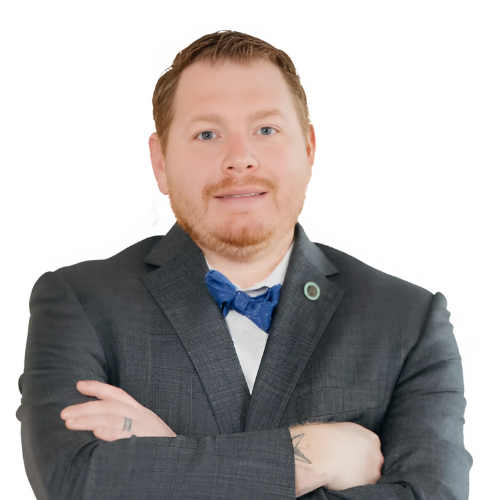
Mathew Dick
Mathew Dick is a trusted real estate professional specializing in buying, selling, and relocating in Central Texas. With a client-focused approach, he ensures a smooth and successful journey for every homebuyer and seller.