Powering Progress or Changing Our Communities? The Truth About Data Centers, Solar and Wind Farms
And honestly, it is an uncomfortable conversation, because there are real benefits, real concerns, and a whole lot of unanswered questions.
If somebody offered to bring a billion-dollar project into our community, we might get excited. Investment sounds great. Jobs sound great. Infrastructure sounds great. But if that project is next door to the land we bought because we loved the rolling hills, the pond, the open view, or the quiet, our answer may change real quick.
Why Energy Infrastructure Matters in Central Texas Real Estate
We are not trying to make this a political argument. We are talking about real estate, land use, property values, and the things that affect people when they are making one of the biggest financial decisions of their lives.
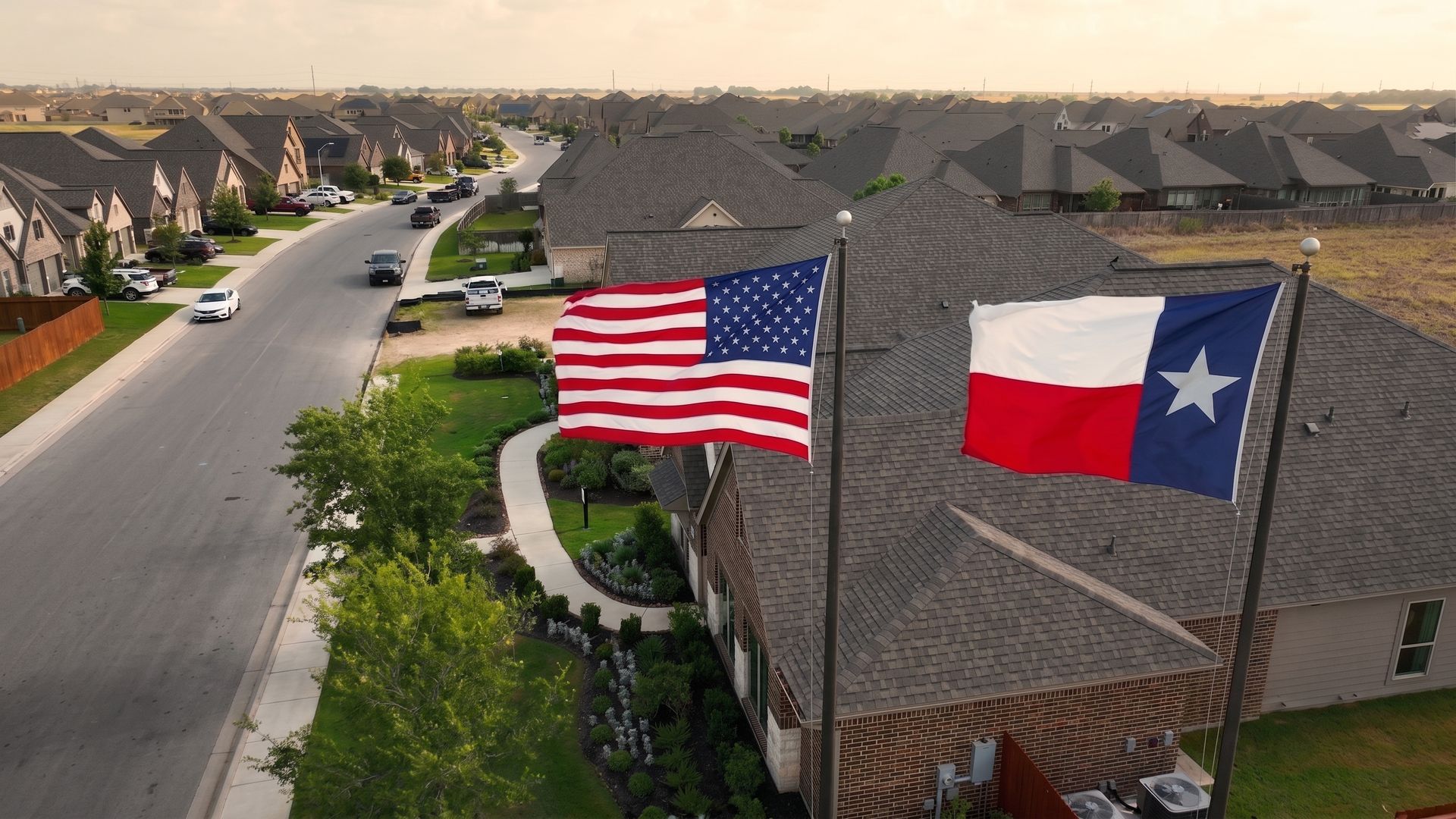
We have already seen how a nearby solar farm can affect a home search. A buyer can love a house on paper, love the layout, love the backyard, and then walk outside and realize the front view is miles of solar panels. For some buyers, that may not matter. For others, it can immediately kill the deal.
That does not mean every property next to a solar project loses value. It does mean that proximity, visibility, buyer preferences, and the purpose of the property all matter. A custom home on 10 acres that was built around peace, privacy, and a rural setting may be evaluated differently than a property intended for industrial use, investment, or future development.
That is why we cannot look only at the house. We have to look around the house.
For buyers, that means researching what exists now and what may be planned nearby. For sellers, it means being realistic about what buyers will see when they pull into the driveway. For landowners, it means understanding exactly what is being exchanged when a company offers a sale or a long-term lease.
Data Centers in Central Texas and Their Real Estate Impact
Bell County is in an interesting spot. We sit between major Texas metros including Austin, Dallas-Fort Worth, Houston, and the greater Central Texas corridor. Land is generally more affordable than Austin, while the area remains accessible to Austin's technology economy. It is not hard to understand why technology and industrial development are looking this direction.
Data centers are part of that shift. They support the digital services we use constantly, including social media, streaming, cloud storage, artificial intelligence, business systems, podcasts, and every other thing that needs to be processed and stored somewhere.
We can complain about data centers all day, but if we are on Facebook, Instagram, TikTok, Netflix, cloud software, or AI tools, we are participating in the demand that makes those facilities necessary. We cannot really have the convenience without the infrastructure behind it.
Investment does not erase community concerns
Large facilities can bring major investment. One local Meta campus discussed in the community was described as roughly an $800 million investment across a 700-acre campus, with around 300 megawatts of capacity. Those numbers are huge, even if most of us are not walking around casually calculating megawatts.
But major investment does not automatically answer the questions residents have:
- How much water will the facility use?
- How much strain will it put on local power infrastructure?
- Will it change the character of a rural area into an industrial corridor?
- How many jobs will remain after construction is complete?
- Will those jobs go to local workers?
- Who pays for expanded roads, utilities, and public infrastructure?
- Why are large companies receiving tax abatements while local property owners are dealing with rising taxes?
Those are fair questions. People deserve clear answers without the conversation turning into threats, chaos, or neighbors treating each other like enemies. Bell County has always been a relationship-driven community. We can disagree while still acting like decent human beings.
Water is the concern that keeps coming up
Water is a huge issue in Central Texas, especially for data centers. Cooling infrastructure can require substantial water use, and people are understandably worried about drawing from a limited natural resource without a clear plan for replenishment.
Closed-loop water systems have become part of the conversation. The idea is that a facility can reuse water within its cooling process instead of continually pulling more water and sending it away. That sounds like a better direction than simply using large volumes and leaving communities to wonder what happens next.
Still, we need specifics. How much water will be used? Where will it come from? What happens during drought? How is the water handled? What safeguards exist for the surrounding community? We should not have to guess at that stuff after a project is already underway.
Jobs are more complicated than the headlines
Data centers do create jobs, especially during construction. Building a major campus can require thousands of workers, contractors, tradespeople, logistics teams, and support services.
The concern is what happens afterward. Once the facility is built, the permanent workforce may be much smaller. Some roles may be specialized. Contractors may travel from project to project instead of becoming long-term members of the community. Remote teams may support operations from somewhere else entirely.
That does not mean the jobs are meaningless. It means we should separate temporary construction employment from permanent local employment when evaluating a project's long-term benefit.
Solar Farms, Wind Farms, and Land Use in Central Texas
Solar farms and wind projects bring a similar mix of opportunity and concern. Drive through parts of East Bell County and solar projects are already hard to miss. Head farther north or west in Texas and wind turbines become part of the horizon.
These projects can bring income to landowners, particularly families with acreage that is no longer actively farmed or ranched. A long-term lease may allow owners to keep their land in the family while receiving income from it. If a family has inherited a large tract of land, lives out of state, and has no plan to farm or ranch it, leasing it can look like a no-brainer.
That is one side of the fence.
The other side is what happens to neighboring land, views, road traffic, wildlife, soil, and the long-term character of the area. A ranch buyer may not feel the same way about a view full of massive turbines as a landowner who receives lease income from them. Neither perspective is crazy. They are simply different.
Questions landowners should ask before signing
Long-term energy leases can last decades. Before signing anything, landowners need to know exactly what they are agreeing to and should seek qualified legal and financial guidance for their specific situation.
- How long does the lease last, and what renewal rights does the company have?
- What areas of the property can be accessed, built on, or improved?
- Who is responsible for roads, fencing, drainage, and damage during construction?
- What happens at the end of the lease?
- Who pays to remove equipment and restore the land?
- What protections exist if the developer sells the project or goes out of business?
- How will the agreement affect future sale options, financing, or neighboring owners?
We have heard plenty of questions about whether land can truly be returned to its original condition after a solar farm lease ends. We do not have a universal answer because terms and conditions can vary. That is exactly why the decommissioning and restoration language matters so much before a contract is signed, not after.
Texas is using an all-of-the-above approach
Texas has long been an energy state. Oil and gas are not disappearing overnight, and wind and solar are not suddenly going to replace everything. The reality is more of an all-of-the-above strategy: oil, natural gas, wind, solar, battery storage, and other sources all playing roles as demand increases.
Texas is already a leader in wind energy and one of the top states for installed solar capacity. That growth is connected to our available land, our resources, and the enormous amount of electricity demanded by growing cities, industries, AI, and data centers.
Whether we love every project or not, the power demand is not going backward.
Do Residential Solar Panels Affect Home Value and Resale?
Residential solar panels are a completely different conversation from a large solar farm. They can absolutely make sense for some homeowners. But we need to stop pretending they automatically add massive value to every house.
In our market, panels may lower utility costs, but they do not always create a matching increase in resale value. A fully designed system with battery storage, such as Tesla Powerwalls, can be much more attractive than a basic panel setup with a large remaining loan balance.
For example, a large home with a pool, outdoor kitchen, and significant energy use may benefit heavily from a properly sized system with battery backup. One local example reported utility savings in the 60% to 65% range. That can be meaningful. But every setup is different, and a smaller or poorly designed installation may not produce the savings the homeowner expected.
The solar panel lien problem
This is where real estate gets very real. If solar panels were financed, there may be a lien or payoff obligation tied to the property. Sellers need to disclose that early, because clear title matters at closing.
A common sales pitch is that a buyer can simply assume the solar loan. Sometimes that may be possible, but it depends on the buyer's debt-to-income ratio, loan program, approval, and willingness to take on an additional debt. In many FHA and VA situations, assumption is not a simple solution.
And from the buyer's side, taking on someone else's solar payment is not always appealing. A buyer may like the panels but still prefer the seller to pay off the balance as part of the transaction.
Here is the hard truth: a homeowner may expect a large profit from selling, only to discover that the solar payoff eats a major chunk of the proceeds. Lowering a utility bill is great, but it does not guarantee a higher net profit when the home sells.
Do the due diligence before buying residential solar
We are big believers in asking questions and using people we trust, especially local providers with local reputations. A company that knocks on the door today and is gone tomorrow can leave homeowners in a bad spot.
We have seen situations where a solar company went out of business while a homeowner still had a payment. We have seen panel systems removed for roof repairs after storms, with substantial costs to reinstall them. We have seen homeowners discover that the equipment installed was not the premium product they believed they were buying.
Before signing for a solar system, we need to know:
- Who owns the panels, the homeowner, a lender, or a leasing company?
- What is the total payoff amount and monthly payment?
- What is the expected utility savings, and how was it calculated?
- What warranties apply to panels, inverters, batteries, labor, and roof penetrations?
- Who removes and reinstalls the system if the roof needs repair or replacement?
- What happens if the installer closes or stops servicing the area?
- How will the financing affect a future home sale?
Solar can be a good move. It just needs to be a researched move, not an impulse purchase made because somebody had a convincing porch pitch.
What Central Texas Buyers, Sellers, and Landowners Should Know
We cannot promise a crystal ball on property values. Nobody can tell us exactly what a particular solar farm, wind project, or data center will do to an individual home's value five or ten years from now.
What we can do is evaluate the current market, study comparable sales, consider buyer reactions, and help people make decisions with their eyes open.
For buyers
- Look beyond the property line before making an offer.
- Ask what is built, proposed, zoned, or publicly discussed nearby.
- Consider views, noise, roads, utility infrastructure, and the type of land surrounding the home.
- Understand solar panel ownership and payoff details before falling in love with a house.
- Think about resale from day one, especially if the property is near major development.
For sellers
- Disclose solar loans, liens, leases, and contract details early.
- Be realistic if a nearby project changes the property's view or buyer pool.
- Do not assume solar equipment adds dollar-for-dollar value to the list price.
- Work through potential payoff and closing scenarios before accepting an offer.
For landowners and investors
- Understand every term of an energy lease before signing.
- Think beyond the monthly payment and evaluate the future use of the land.
- Consider access rights, restoration obligations, transfer provisions, taxes, and resale implications.
- Get advice from professionals who work for you, not the company offering the lease.
The Big Picture for Central Texas Real Estate
We are in the middle of an enormous infrastructure buildout. The expansion of AI, data centers, energy generation, and power infrastructure has been compared to the scale of the interstate buildout. That is a wild thought, but it makes sense when we look at how much of modern life runs through technology.
We all want fast internet, instant entertainment, easy access to information, cloud storage, social media, automation, and AI. We want it now. We are spoiled by convenience, and we can admit that without hating ourselves for it.
But convenience has a footprint. It requires land, electricity, water, roads, equipment, and money. And somebody has to answer the question of how much is too much.
There is no easy answer. We want growth, stronger schools, better amenities, jobs, investment, and opportunity. We also want open space, water security, property rights, rural character, and a power grid that can hold up when Texas weather decides to get weird.
Those things can conflict. That is why this is not a simple good-or-bad issue.
Our next move should be to learn more. Before we pick a team, panic, celebrate, or yell at each other online, we need better information. We need honest questions, clear agreements, responsible planning, and a willingness to recognize that the people on the other side of the fence may have valid concerns too.
Central Texas is changing. The real question is not whether growth is coming. It is what growth looks like, who benefits, who carries the burden, and how it affects the place we call home.
Thinking about buying, selling, or investing in Central Texas? Whether you're evaluating a property near a data center, considering land for an energy lease, or wondering how solar panels could affect your home's value, we're here to help you make informed decisions. Call or text us today at (253) 820-7327 to discuss your real estate goals and get expert guidance tailored to your situation.
FAQs About Data Centers, Solar Farms, and Central Texas Real Estate
Do data centers create local jobs?
They can create substantial construction work while a facility is being built, but the number of permanent jobs may be much smaller. The long-term local impact depends on the project's staffing needs, contractor relationships, and whether specialized roles are filled locally.
Do solar farms lower nearby property values?
There is no one answer for every property. The impact can depend on visibility, distance, buyer preferences, land use, the property's setting, and local market conditions. A property with a rural view may attract a different buyer response than one near industrial or commercial development.
Do solar panels increase a home's value?
They may add some appeal or value, especially if the system is paid off and includes meaningful battery backup. However, financed panels can complicate a sale if a large payoff or lien remains. Lower energy bills do not automatically equal a higher resale price.
Can a buyer assume a solar panel loan?
Sometimes, but only if the buyer qualifies and the lender permits it. Debt-to-income limits and loan program requirements can make assumptions difficult, particularly for some FHA and VA buyers. Sellers should disclose solar financing early so everyone can plan around it.
What should landowners ask before leasing land for solar or wind development?
Landowners should understand lease duration, access rights, construction impacts, compensation, transfer rights, decommissioning obligations, land restoration requirements, and what happens if the developer sells the project or goes out of business.
Read More: Should I Buy or Sell Right Now? Why It Can Still Be a Good Time to Sell

Mathew Dick
Mathew Dick is a trusted real estate professional specializing in buying, selling, and relocating in Central Texas. With a client-focused approach, he ensures a smooth and successful journey for every homebuyer and seller.