10 Things to Know Before Buying a Used Manufactured Home in Troy, Texas
A 3-bedroom, 2-bath home on half an acre for under $175,000 in Central Texas sounds like a steal. And it is, if you know what you're looking at. I'm standing outside a 2001 double-wide manufactured home in Troy, Texas, listed at $174,900. It has fresh paint, updated flooring, and solar panels on the roof. But before you get excited about the price, there are ten things I want you to verify. Because what looks beautiful on the surface can hide expensive problems underneath.
Manufactured homes are not the same as modular homes or traditional site-built houses. They're built under federal HUD code, they sit on a different kind of foundation, and they come with paperwork requirements that can affect your financing. If you skip the verification steps, you might close on a home that your lender won't approve, or discover a septic system that needs $10,000 in repairs.
I spent 13 years on active duty as an Army infantryman, and now I help military and civilian families buy and sell homes throughout Central Texas. Today we're walking through this Troy property and talking about the questions a smart buyer asks before purchasing a used manufactured home. This isn't a professional inspection, it's a briefing on what to investigate before you write an offer.
Table of Contents
Troy: Affordable Manufactured Homes on Half-Acre Lots
Troy sits in Central Texas, and it's one of the places where you can still find manufactured homes on half-acre lots for under $175,000. No HOA. No restrictions on parking your truck or storing equipment. If you're looking for affordable entry into homeownership, or you want acreage without paying $300,000, this is the kind of property that shows up in your search.
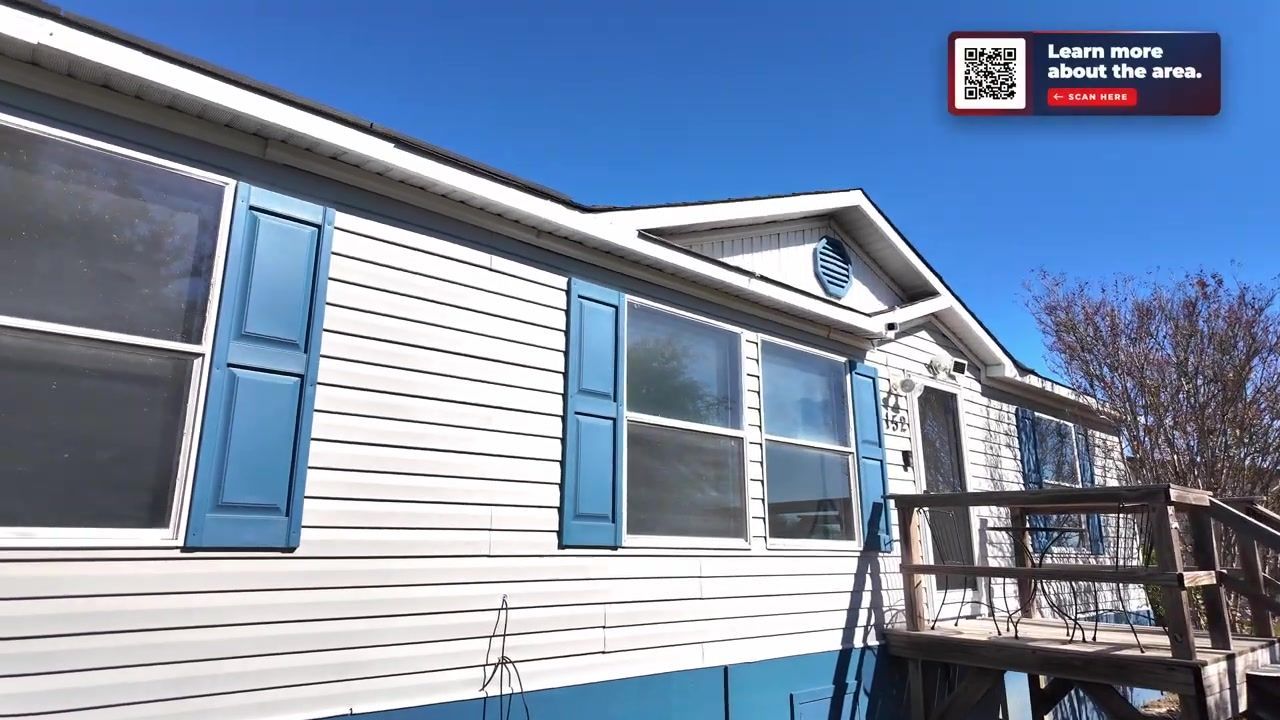
The example we're touring today is 152 Hillside Drive: a 2001 double-wide with 1,680 square feet, three bedrooms, two bathrooms, and a covered back deck. The seller has updated the flooring, painted the cabinets, and installed stainless steel appliances. There are solar panels on the roof that the seller intends to pay off at closing. The asking price is $174,900.
Here's what I like about this property type. You get space. You get land. You're not paying HOA dues or dealing with a neighborhood board telling you what color you can paint your mailbox. If you need a place to park a trailer, store tools, or let your dog run, half an acre gives you room to breathe.
But manufactured homes come with trade-offs. Financing can be more restrictive. Some lenders require the home to be on a permanent foundation and legally classified as real property. Insurance can cost more. Resale can be slower. And if the home wasn't maintained properly, you could be looking at expensive repairs that aren't obvious during a walkthrough.
Troy is rural enough that you'll have septic systems and well water or rural water supply. That means you're responsible for maintenance. If the aerobic septic system fails, you're paying for it. If the well pump dies, you're replacing it. This isn't a neighborhood where you call the city when something breaks.
If you're relocating to Central Texas and you want affordable acreage, Troy is worth considering. But you need to know what you're buying before you close.
HUD Tags, Serial Numbers, and Ownership Paperwork
Manufactured homes are built under the federal HUD code. That's different from modular homes, which follow state and local building codes. The distinction matters because your lender, your insurance company, and your title company all care about how the home was constructed and whether it's been properly documented.
Every manufactured home has HUD certification labels, metal tags that identify each section of the home. On a double-wide, you're looking for two labels, one per section. They're usually located toward the end of the home, sometimes near the hitch area or under the skirting. Inside, there's also a data plate with manufacturer information. You might find it in a kitchen cabinet, a bedroom closet, or near the electrical panel.
When you're buying a used manufactured home, I want you to verify that those labels are present and that the serial numbers match the MLS legal description. If a label is missing, that can create problems with financing and title transfer. Some lenders won't approve a loan without proof of HUD certification.
In Texas, manufactured homes have a statement of ownership process. If the home is being sold with land, you need to confirm that the ownership records are clear, that any liens have been satisfied, and that the real property election has been completed. Just because a manufactured home has been sitting on the same property for 20 years doesn't automatically mean it's been legally converted to real property.
I also want to know whether the home has ever been relocated after its original installation. If it was moved, that can affect the foundation, the structural integrity, and your financing options. Some lenders won't finance a relocated manufactured home unless it meets specific criteria.
This isn't about assuming something is wrong. It's about making sure the paperwork is in order before you get to closing. Because if your lender discovers a problem with the title or the HUD certification two days before you're supposed to close, your deal could fall apart.
Foundation, Roof, and Exterior Condition
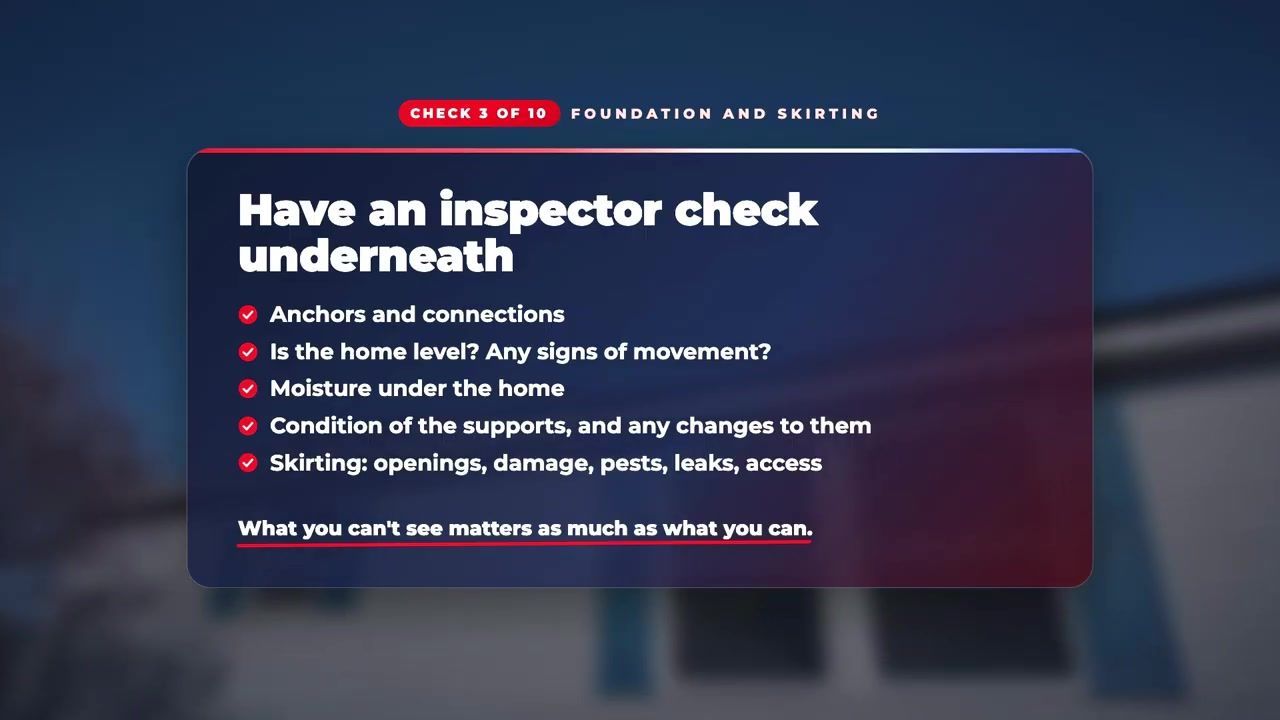
The foundation under a manufactured home is not the same as a poured concrete slab. Some manufactured homes sit on piers and beams. Some are on a permanent foundation. Your lender will care about this, because many conventional loans require the home to be on a permanent foundation and classified as real property.
When you're walking the property, look at the skirting. Is it intact? Are there gaps where animals could get underneath? Moisture under a manufactured home can cause serious problems, floor rot, mold, structural damage. If the ground around the home doesn't drain properly, water can pool under the house.
Now let's talk about the roof. This property has a 30-year architectural shingle roof with solar panels installed. I want to know how old the roof is, whether it's been repaired or replaced, and whether there are any signs of leaks. I also want to look at the flashing around penetrations, vents, chimneys, solar panel mounts. If water is getting in, you'll see staining on the ceilings or walls inside.
The exterior of this home has vinyl siding and wood composite skirting. Walk around the house and look for damage, warping, or signs of moisture intrusion. Check the windows and doors. Are they properly sealed? Are there gaps in the trim? Do the doors close evenly, or is there evidence of settling?
After a heavy rain, pay attention to how water drains away from the house. If the ground slopes toward the foundation, that's a red flag. You want water moving away from the structure, not pooling next to it.
This is where a professional inspector earns their fee. They'll get under the home, check the foundation supports, look for signs of moisture damage, and evaluate the structural condition. Don't skip the inspection just because the exterior looks clean.
Interior Updates and What to Check Underneath
When you walk into this home, the first thing you notice is the luxury vinyl plank flooring, the fresh paint, and the open layout. For a 2001 manufactured home, the updates change the first impression. It feels modern. It feels move-in ready.
But I want you to pay attention to what's underneath those updates. As you walk through the house, notice how the floor feels. Are there soft spots? Does the floor feel uneven? Do the doors close properly, or are there gaps in the trim? What about the area where the two sections of the double-wide come together? That's called the marriage line, and it's a common place for movement or settling.
Don't assume every small cosmetic imperfection means something is wrong. Homes settle. Materials expand and contract. Older properties experience wear. But if something feels unusual, if a door won't latch, if the floor bounces when you walk on it, if there's a visible gap in the trim, investigate it. Don't let beautiful new floors distract you from what may be happening underneath.
The layout itself is functional: approximately 1,680 square feet, three bedrooms, two bathrooms, and a split floor plan. The primary suite is on one end, the secondary bedrooms are on the other, and there are multiple living areas. You've got a fireplace in the main living room. If you're buying a home with a fireplace, verify what type it is and whether it's operational. Don't assume it's ready to use just because it looks good.
In the kitchen, the updates stand out, painted cabinetry, stainless steel appliances, updated countertops. But while you're admiring the finishes, think about what's behind them. Plumbing. Electrical. Water supply. Drainage. Ventilation. I want the inspector checking accessible plumbing connections and looking for signs of leakage. I want to know the condition of the water heater. I want an inspection of the electrical system. Have any modifications been made? Were they done correctly? Does the system support the equipment in the home?
If the home has been remodeled, were any necessary permits obtained? That's another question worth asking.
In the bathrooms, look beyond the finishes. Check the windows. Check the ceiling. Pay attention to any staining around tubs, showers, and toilets. Ask about previous leaks. Pay attention to ventilation. Bathrooms produce a lot of moisture, and if that moisture isn't managed properly, it can create problems over time.
This isn't about assuming a home has defects. It's about making sure you're not overlooking something because the paint and flooring look new.
Septic Systems, Water Source, and Land Restrictions
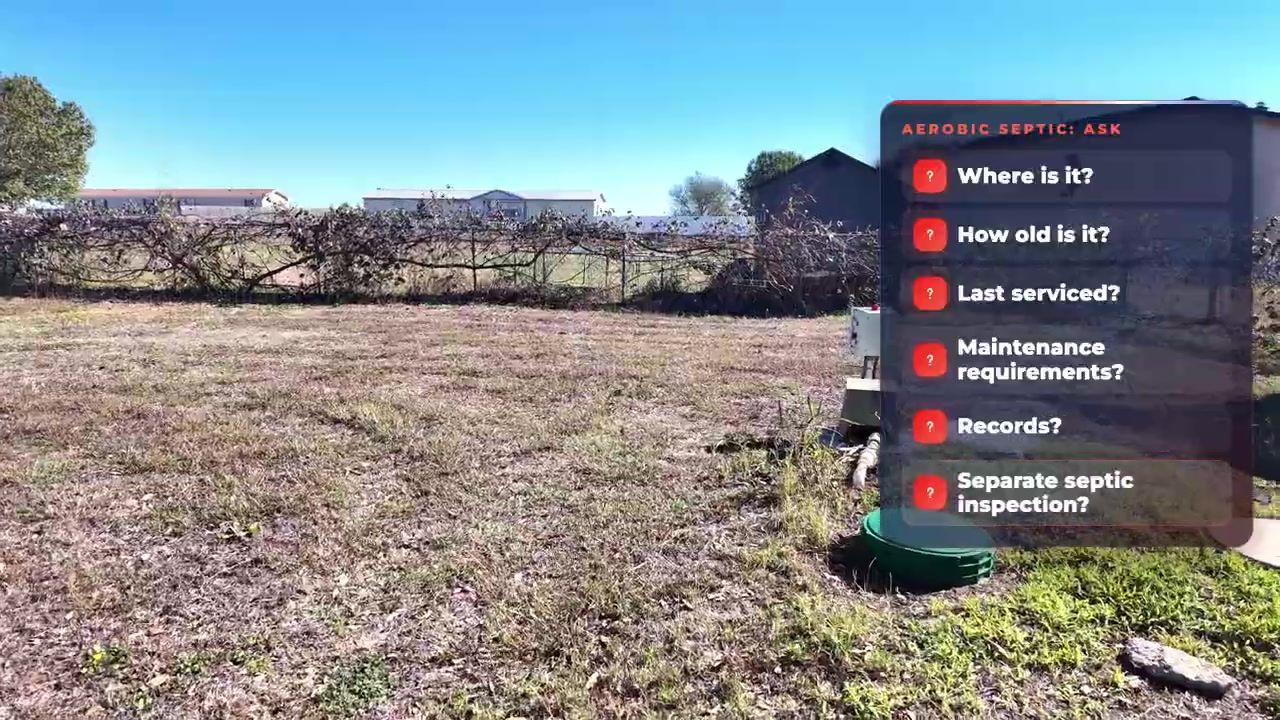
This property sits on approximately half an acre with a covered back deck, chain-link fencing, and no HOA. That's the appeal. But it also comes with responsibilities.
The property has an aerobic septic system. Whenever I'm showing a rural or semi-rural property with septic, I want buyers to understand what they're taking on. Where is the system located? How old is it? When was it last serviced? Are there maintenance requirements? Are there records? Is the system functioning properly? Should we have a separate septic inspection?
Aerobic systems require regular maintenance. If you don't maintain it, it will fail. And replacing a septic system can cost $10,000 or more. This isn't like city sewer, where you pay a monthly bill and forget about it.
I also want to confirm the water source and utility connections. The MLS identifies the aerobic septic system, but it doesn't clearly establish a specific water provider or source. Is it well water? Is it rural water supply? That's something to verify before closing.
Just because you have half an acre doesn't mean you can automatically build anything you want. If you're thinking about adding a shop, a pool, another structure, or making major improvements, you need to investigate the septic layout, easements, restrictions, setbacks, and applicable requirements. A large backyard gives you possibilities, but those possibilities still need to be verified.
10 Things to Verify Before Closing
Let's put everything together. If you're thinking about buying a used manufactured home, here's what I want you to remember:
1. Verify the year, manufacturer, HUD labels, and identification. Make sure the labels are present and the serial numbers match the legal description.
2. Confirm the statement of ownership and legal property classification. In Texas, manufactured homes have a title process. Make sure the home has been properly converted to real property if it's being sold with land.
3. Understand the foundation and whether it meets your lender's requirements. Many conventional loans require a permanent foundation.
4. Investigate whether the home has been relocated. If it was moved after its original installation, that can affect financing and structural integrity.
5. Have the roof, siding, windows, and drainage evaluated. Look for signs of leaks, moisture intrusion, and poor drainage around the foundation.
6. Pay attention to flooring levelness and signs of moisture. Walk through the home and notice how the floor feels. Check for soft spots and uneven areas.
7. Inspect plumbing, electrical, HVAC, and major systems. Don't assume everything works just because the home looks updated.
8. Review additions, decks, and modifications. Were permits obtained? Were the modifications done correctly?
9. Verify septic, water, utilities, and land restrictions. Understand what you're responsible for maintaining and what you're allowed to build.
10. Confirm financing, insurance, and solar obligations before closing. Make sure your lender will approve the loan, your insurance company will cover the home, and you understand any solar panel lease or purchase agreements.
Some of those items require documents. Some require inspections. Some require conversations with your lender, title company, and other qualified professionals. Don't skip the verification steps just because the home looks beautiful.
Conclusion
Manufactured homes aren't automatically a bad investment, and site-built homes aren't automatically problem-free. The key is understanding what you're buying, the condition, the paperwork, the foundation, the financing, and the land underneath it.
If you're looking at manufactured homes, acreage, or traditional houses anywhere around Troy, Temple, Belton, Killeen, Copperas Cove, or Central Texas in general, I'd love the opportunity to help. I'd rather help you ask the right questions before you buy than have you discover something expensive after closing.
Call me, text me, or email me. My contact information is in the description. Let's schedule a call or meet in person and talk through what you're looking for. I'll help you understand the market, identify properties that fit your budget, and connect you with qualified inspectors and lenders who know how to work with manufactured homes.
FAQ
What is the difference between a manufactured home and a modular home?
Manufactured homes are built under the federal HUD code and transported to the property on a permanent chassis. Modular homes are built under state and local building codes and assembled on-site on a permanent foundation. Lenders and insurance companies treat them differently.
Can I get a VA loan or conventional loan for a manufactured home?
Yes, but the home must meet specific requirements. Most lenders require the home to be on a permanent foundation, classified as real property, and meet HUD certification standards. Some lenders won't finance relocated manufactured homes.
What is an aerobic septic system and how much does it cost to maintain?
An aerobic septic system uses oxygen to break down waste. It requires regular maintenance, including inspections and servicing of the aerator. Maintenance costs vary, but expect to pay a few hundred dollars per year. Replacement can cost $10,000 or more.
What happens if the HUD certification labels are missing?
Missing HUD labels can create problems with financing and title transfer. Some lenders won't approve a loan without proof of HUD certification. You may be able to obtain replacement documentation from the manufacturer, but it's not guaranteed.
Can I add a shop or pool to a property with a manufactured home?
Maybe. You need to investigate the septic layout, easements, setbacks, and local restrictions. Just because you have half an acre doesn't mean you can build anywhere on it. Check with the county or city before making plans.
Are manufactured homes a good investment in Central Texas?
Manufactured homes can be a good investment if you understand what you're buying. They offer affordable entry into homeownership and access to acreage. But they can be harder to finance, insure, and resell than site-built homes. Do your homework before you buy.

Mathew Dick
Mathew Dick is a trusted real estate professional specializing in buying, selling, and relocating in Central Texas. With a client-focused approach, he ensures a smooth and successful journey for every homebuyer and seller.