PCS to Fort Hood: The Real Cost of Living in Central Texas on Military Pay
If you are planning a PCS to Fort Hood , one of the biggest questions is simple: can your military pay actually support the kind of life you want in Central Texas?
That question sounds straightforward, but the real answer is more layered than just comparing your BAH to a rent number online. Around Fort Hood (formerly Fort Cavazos), the cost of living is shaped by four big pieces that all work together: BAH, home prices, utilities, and Texas property taxes. Miss one of those, and your budget can feel a lot tighter than expected.
We have talked to a lot of military families over the years, from junior enlisted soldiers to senior officers, and the same concerns come up again and again. Is it enough to buy here? Are taxes going to wreck the budget? Will summer utility bills hit harder than expected? Those are the right questions to ask before a PCS to Fort Hood, and getting honest answers early can save a lot of stress later.
Table of Contents
- Why PCS to Fort Hood Budgeting Is Different
- Start With BAH Your Housing Foundation
- What Those BAH Numbers Look Like by Rank
- Rent vs Buy in Central Texas
- How Far Your Money Goes in Central Texas
- The Two Big Budget Wild Cards Utilities and Property Taxes
- Putting the Real Monthly Cost Together
- What Military Families Should Do Before Signing a Lease or Contract
- FAQs About PCS to Fort Hood
Why PCS to Fort Hood Budgeting Is Different
A PCS to Fort Hood is not just a move to one city. It usually means choosing between several different communities, each with its own feel, pricing, and tradeoffs. Most military families end up looking at places like Killeen, Harker Heights, Copperas Cove, Temple, Belton, and sometimes even farther out toward Georgetown or Round Rock.
That matters because “Central Texas” is not one single market. A budget that works in Killeen may feel stretched in Belton. A mortgage that looks fine on paper in Harker Heights can become uncomfortable once taxes and utilities are added in. That is why broad averages are helpful, but they are never enough on their own.
For most military households, the key mistake is treating BAH like the whole housing budget. It is not. It is the starting point.
When we think about cost of living around Fort Hood, we need to keep these four pieces on the table at all times:
- BAH
- Local rent or home price
- Utilities
- Texas property taxes
Those four pieces are what determine whether your move feels comfortable or financially frustrating.
Start With BAH Your Housing Foundation
For a PCS to Fort Hood, BAH is your foundation. For this area, BAH is designed to cover, on average, about 95 percent of rental costs and renters insurance. The important words there are on average and rental costs.
That means two things right away.
- BAH is generally more predictable and straightforward if you plan to rent.
- BAH does not guarantee that buying will be fully covered, especially once taxes and utilities are included.
There are a few trends worth paying attention to. BAH has been rising over the past several years, which is good news. That helps military pay keep up better with the local market. There is also a clear difference between rates with dependents and without dependents, with families receiving a meaningful bump. At the same time, Fort Hood area BAH is not at the level of the most expensive duty stations in the country, so expectations need to stay grounded in the reality of this market.
One of the advantages military families do have is that BAH is tax free. That gives it stronger purchasing power than a civilian housing allowance of the same dollar amount. It is one of the reasons buying can still make sense here, even when monthly ownership costs look close to the line.
What Those BAH Numbers Look Like by Rank
For anyone planning a PCS to Fort Hood, it helps to put real rank-based numbers to the conversation.
Junior Enlisted: E1 to E4
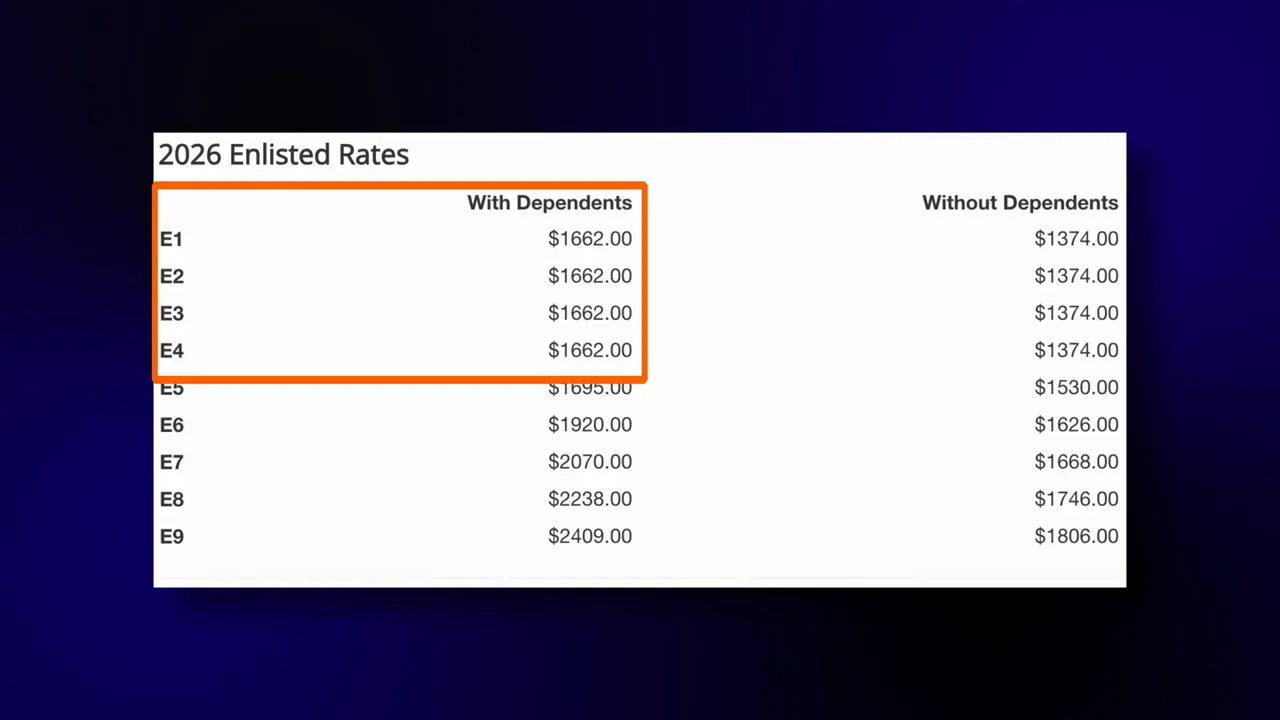
For 2026, projected BAH for an E1 to E4 with dependents is around $1,662. For a single E4, it is closer to $1,440.
That difference matters. It can be the difference between targeting a modest apartment and targeting a three-bedroom rental house.
Mid-Grade Enlisted: E5 to E6
A sergeant with dependents is around $1,695, and a staff sergeant is around $1,920.
This is often the range where families start to get more flexibility. Renting a solid home becomes realistic, and buying starts to become a serious option depending on debt, interest rates, and neighborhood choice.
Senior Enlisted and Warrant Officers
For an E8, E9, or some warrant officer ranks with dependents, BAH lands roughly in the $2,346 to $2,400 range.
At that level, families usually have more breathing room and can look more seriously at newer homes, stronger school districts, and higher-demand areas.
Officers
A typical O3 with dependents is around $2,340, while an O5 is around $2,748.
For officers, BAH often gets much closer to covering full PITI on a substantial home, but “often” is not the same thing as “always.” Around Fort Hood, taxes can still push a mortgage beyond the allowance.
Rent vs Buy in Central Texas
For a PCS to Fort Hood, rent versus buy is where the numbers become real.
The broader Texas average home value might sit around $297,000, but averages can be misleading. What matters is where you want to live and what kind of home you need. Central Texas is a mix of military-heavy communities, growing suburbs, and small-town markets that each behave a little differently.
Generally speaking, renting is simpler and lower-risk in the short term. Buying can absolutely work, especially with a VA loan, but only if you account for all the ownership costs and not just principal and interest.
That is where a lot of military families get tripped up. They run the mortgage estimate and feel good about it. Then taxes, insurance, and utilities show up and suddenly the monthly number looks very different.

How Far Your Money Goes in Central Texas
When preparing for a PCS to Fort Hood, where you choose to live will shape both your budget and your daily experience.
Killeen and Copperas Cove
These tend to be some of the more budget-friendly options and are heavily tied to the military community. Three-bedroom homes can often be found in the $220,000 to $280,000 range. Rental inventory is usually stronger too, with many three-bedroom homes landing around $1,400 to $1,700 per month.
The tradeoff is that some of the housing stock is older, often built from the 1970s through the 1990s, and neighborhood consistency can vary a lot. Some streets are great. Some need more scrutiny. This is where local knowledge matters.
Harker Heights
Harker Heights is often seen as a step up in consistency and overall appeal. Homes frequently range from the $270,000s to the $350,000s. Families like it, which means rentals can be more competitive, but the properties are often well-kept and the neighborhoods tend to feel more stable.
Belton and Temple
Belton has a more traditional Texas town feel and often commands a premium, especially where school ratings are strong. Many homes land in the $300,000 to $400,000 range.
Temple is more mixed. There is good value there, but location matters a lot. Some areas can be a great fit, while others require more homework before committing.
Georgetown and North Round Rock
These areas are more tied to the Austin metro spillover. You are paying for highly rated schools, newer developments, and better access to a broader job market. Homes often start in the mid-$300,000s and rise fast.
For many military families, these areas are more aspirational than practical unless rank, income, or spouse employment creates extra room in the budget.
A Real Rental Example
A staff sergeant with about $1,920 in BAH may be able to rent a modern three-bedroom, two-bath home in Harker Heights for around $1,800, leaving a small cushion for renters insurance.
That is a strong example of BAH working pretty well for rent in this market.
A Real Buying Example
Now take a captain with roughly $2,340 in BAH, using a VA loan on a $350,000 home at a 6 percent interest rate.
The principal and interest might be about $1,850. Add approximately $575 for taxes and $100 for insurance, and total PITI lands around $2,525.
That is already about $185 over BAH, before utilities are added.
That does not mean buying is a bad idea. It means the full picture matters.

The Two Big Budget Wild Cards Utilities and Property Taxes
If there is one section every family doing a PCS to Fort Hood should pay attention to, it is this one.
Utilities and property taxes are the budget wild cards in Central Texas. These are the costs that often surprise people the most.
Utilities in Central Texas
Texas utilities can be a whole different animal, especially in summer.
Electricity is the biggest one. In many parts of Texas, the market is deregulated, which means you choose your provider. That can create opportunities to save money, but it also means more homework. Rates are billed per kilowatt-hour, and in the heat of summer, a 2,500-square-foot home running air conditioning against 100-degree temperatures can burn through 2,000 or more kilowatt-hours in a month.
At around 15 cents per kilowatt-hour, that can easily become a $300-plus electric bill. Older homes with poor insulation can be worse.

A safe year-round budget for electricity is often $200 to $300 per month, and that is a realistic estimate, not a pessimistic one.
Some utility plans offer free nights or weekends. If your household can shift laundry, dishwashing, or other heavy electric use into those windows, that can help noticeably.
Water, Sewer, and Trash
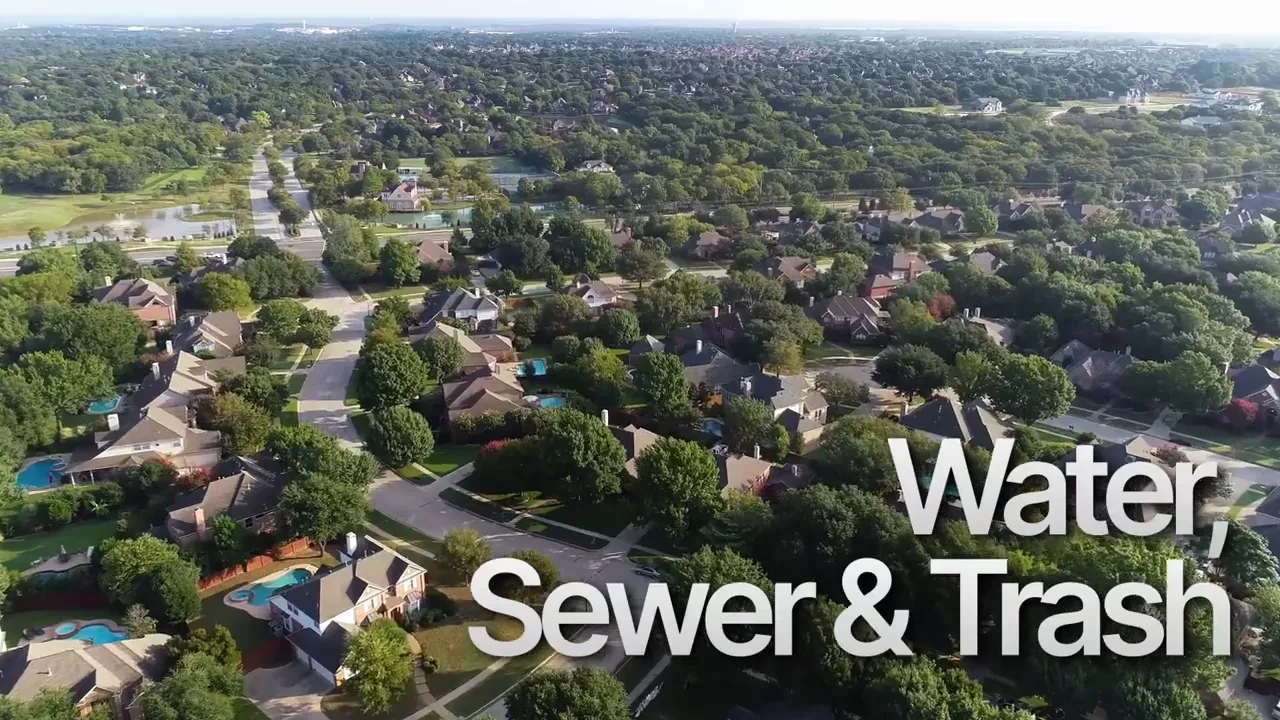
In many city-limit locations, these are bundled together and may run around $70 to $100 a month.
In newer subdivisions with a municipal utility district, or MUD, the bill can climb to $100 to $150 because residents are also helping pay off infrastructure costs for the development.
Natural Gas
Natural gas use varies by home. Some homes use it for heating, cooking, or water heaters, while others do not use it at all. Where it is present, a reasonable estimate is around $30 to $80 depending on season and usage.
Internet
Internet is not optional for most families anymore. Expect somewhere around $70 to $150 for decent service. Some newer neighborhoods may have fiber, but availability depends heavily on the specific area.
When all of that gets added up, utilities for a single-family home can easily total $400 to $700 per month. That is a major number, and it sits outside your BAH.
If you are renting, one of the smartest questions you can ask is this: Can we see average utility bills for the home? That one question can save you from a very expensive surprise.
Texas Property Taxes
Texas has no state income tax, which sounds great, and it is. But the tradeoff is property taxes.
Bell County, including Killeen, Harker Heights, Belton, and Temple, often lands around 2.3 to 2.5 percent. Williamson County, including Georgetown and Round Rock, can range from about 2.1 to over 2.7 percent depending on the exact location.
That means a home in Harker Heights with a 2.4 percent tax rate can generate roughly $8,400 per year in taxes, or about $700 per month. That amount is typically folded into your mortgage escrow payment, which is why monthly ownership costs can look much higher than expected.
Putting the Real Monthly Cost Together
The real cost of a PCS to Fort Hood comes from understanding what the monthly budget actually feels like once all the pieces are combined.
If you are renting, BAH can often cover the rent pretty well, especially in the more military-heavy markets. But you still need enough room in your base pay and overall budget for utilities, internet, groceries, commuting, and everything else.
If you are buying, your monthly housing cost is not just the mortgage. It is:
- Principal
- Interest
- Property taxes
- Homeowners insurance
- Utilities
That is why a home that seems affordable based on principal and interest alone may not actually feel affordable month to month.
The good news is that Central Texas still offers real choice. That is one of the strengths of this area. There are budget-friendly options. There are family-oriented neighborhoods. There are places with stronger schools. There are newer developments. But each option comes with its own mix of cost and compromise.
For some families, the best answer is renting in Killeen or Copperas Cove and keeping expenses low. For others, it is buying in Harker Heights or Belton and accepting a little out-of-pocket contribution each month for a better long-term fit. There is no single right answer. There is only the answer that works for your rank, family size, commute, and financial goals.
What Military Families Should Do Before Signing a Lease or Contract
Before locking anything in during a PCS to Fort Hood, we recommend keeping this checklist in front of you:
- Know your actual BAH rate
Use your exact rank and dependent status. - Separate rent from total monthly housing cost
Rent is not utilities. Mortgage is not total ownership cost. - Research the specific city, not just the region
Killeen, Harker Heights, Temple, Belton, Georgetown, and Round Rock all hit differently on price. - Ask for utility averages
Especially for rental homes in summer-heavy Texas climates. - Run taxes before you buy
Never assume your monthly payment until property tax estimates are included. - Be realistic about tradeoffs
Lower cost often means older housing stock or more neighborhood variation. Higher cost often buys newer homes, more amenities, or stronger schools.
If you keep those points in mind, your PCS to Fort Hood gets a lot more manageable. Not necessarily cheap, but much more predictable, and predictability matters.
If you’re a military family PCSing to Fort Hood and you want help stress-testing your budget (BAH, rent, utilities, and property taxes) before you sign anything, I’d love to help. Call or text 253-820-7327 and tell me your timeline, rank/dependent status, and which areas you’re considering—then we’ll map out realistic next steps for your move.
FAQs About PCS to Fort Hood
Is BAH enough for a PCS to Fort Hood?
For many families, yes, especially when renting. BAH around Fort Hood is generally a solid starting point for rental costs, but it is not the full picture. Utilities can add hundreds of dollars a month, and if you buy, property taxes can significantly increase the total payment.
Is it better to rent or buy after a PCS to Fort Hood?
It depends on your rank, timeline, and budget. Renting is usually simpler and more predictable in the short term. Buying can work well with a VA loan, but only if you account for principal, interest, taxes, insurance, and utilities together.
What are the most affordable areas near Fort Hood?
Killeen and Copperas Cove are typically among the more affordable options for both rent and purchase price. They also have a strong military presence. The tradeoff is that housing stock can be older and neighborhood quality may vary more from one area to the next.
Are utility bills really that high in Central Texas?
They can be. Summer electric bills are often the biggest shock, especially in larger or older homes. For a single-family home, total monthly utilities can easily range from $400 to $700 when electricity, water, sewer, trash, internet, and possibly gas are added together.
How high are property taxes near Fort Hood?
Property taxes are a major factor in this region. In Bell County, rates often fall around 2.3 to 2.5 percent. In Williamson County, they can range from about 2.1 to over 2.7 percent depending on the exact location. Those taxes are usually included in your monthly escrow payment if you buy.
What should we ask before renting during a PCS to Fort Hood?
Ask for average utility bills, confirm what is included in rent, and make sure you understand commute times, neighborhood feel, and school considerations if those matter to your family. A home that fits the BAH number on paper can still feel expensive if utility costs are unusually high.
A PCS to Fort Hood can absolutely work on military pay. In many cases, it works well. The key is being honest about the numbers before you arrive, not after you have already signed paperwork.
BAH gives you a strong base. Central Texas gives you options. But utilities and property taxes are real, and they need to be treated as part of the plan from day one.
When military families move here with clear expectations, they usually make much better decisions on where to live, whether to rent or buy, and how to build a life that actually feels sustainable. That is the goal. Not flashy math. Just a realistic, grounded look at what it costs to live well in Central Texas.
Read More: Top Cities to Live in Central Texas for 2026: Your Ultimate Relocation Guide

Mathew Dick
Mathew Dick is a trusted real estate professional specializing in buying, selling, and relocating in Central Texas. With a client-focused approach, he ensures a smooth and successful journey for every homebuyer and seller.